Village History

An Article published in the Little Milton Newsletter, October 1979

THE EIGHTEENTH AND NINETEENTH CENTURY DEVELOPMENTS OF LITTLE MILTON

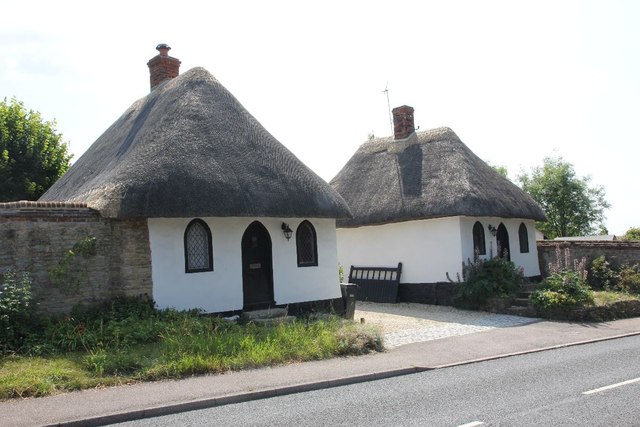
There is much that can be said about the buildings in Little Milton and we are very fortunate to have so many that are 18th century and older in the village. These buildings stand as a monument to two periods of great prosperity in the village’s history, while the lack of 19th century housing is a witness to times of poverty, unemployment and social upheaval that threatened the village’s very survival.

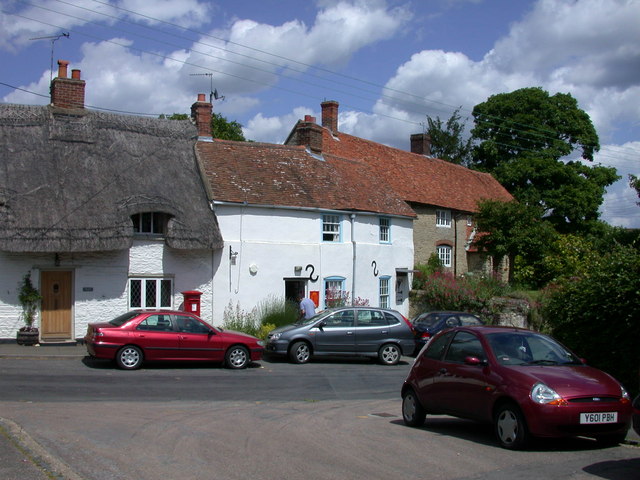
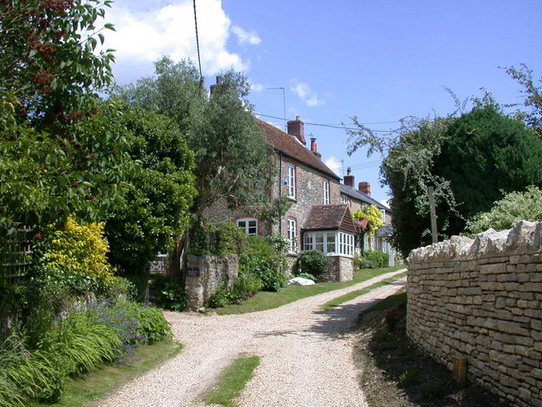
The Civil War in the 1640’s, and particularly the nearby battle of Chalgrove Field, left great destruction and loss of life in the villages and hamlets of Oxfordshire. It was to be many years before any new houses were to be built in Little Milton. The first new house to be built was probably that of Well’s Farm Cottage around 1691. There followed in the next 100 years one of. the most rapid periods of growth in the village’s history. Exactly how many houses were built in this period is difficult to say, but there are at least 30 buildings dating about this period in and around the village. It is easy to recognise the earlier 18th century buildings by the lack of brick work around the frames and corners, the Lamb and the Post Office being examples. Brick, which was only used around window and door frames, corners and chimneys arrived much latter and can be seen in many houses in the village.

The High Street has always been an active business area, since this area formed part of the main route between the old market towns of Wallingford and Thame. There existed well before the 18 century another road which passed through the village. This road came from Watlington along the Haseley Road, through the village and over the fields of Belchers Farm to cross the river below Chippinghurst Manor. This road was once an important traffic route to Oxford. but appears to have lost its importance in the late l8th century. At the intersection of these two streets in the village there apparently stood a mediaeval cross which remained on the area still called ‘the Cross’ until the 19th century when for some reason it was removed.

The 19th century brought great change to the village and landscape Little Milton. Many of these changes were the direct result of the enclosures that took place in the 1830’s  and earlier. With the enclosures came the once familiar hedge and tree rows, a scene that is all too quickly disappearing. The loss of small farms upon which families toiled to make a living led to a slow, migration of young men and women to the cities and elsewhere in search of work. A small group village migrated to Canada. So desperate was the poverty and unemployment in the village, that in 1835 the Vestry Council that sat in Great Milton spent over £573, almost half the money collected from the Poor Tax on relief to Little Milton. The suspicion of any new machinery that might result in losses in work often brought about resentment and on one occasion violence. In 1830 a group of rioters from Drayton, Chiselhampton and Stadhampton assaulted a Mr James Wells and smashed his threshing machine. Naturally the village was unsympathetic to the riots that followed calling upon 136 parishioners as special constables to arrest 6 offenders. Their sentence was 7 years transportation, the likely destination being Australia.

The enclosures also had the effect of changing many of the cottages in the village. Accommodation for farm labourers became so desperate that many of the cottages were converted into smaller dwellings. The three cottages on the Cross contained no less than seven families in what must have been cramped and squalid conditions. Some farm workers had no accommodation at all and took to sleeping in the lofts of barns. During the 19th century, few new buildings were built in the village and most of these were large barns required for stalling animals and storing grain, several of these have now been converted into homes.

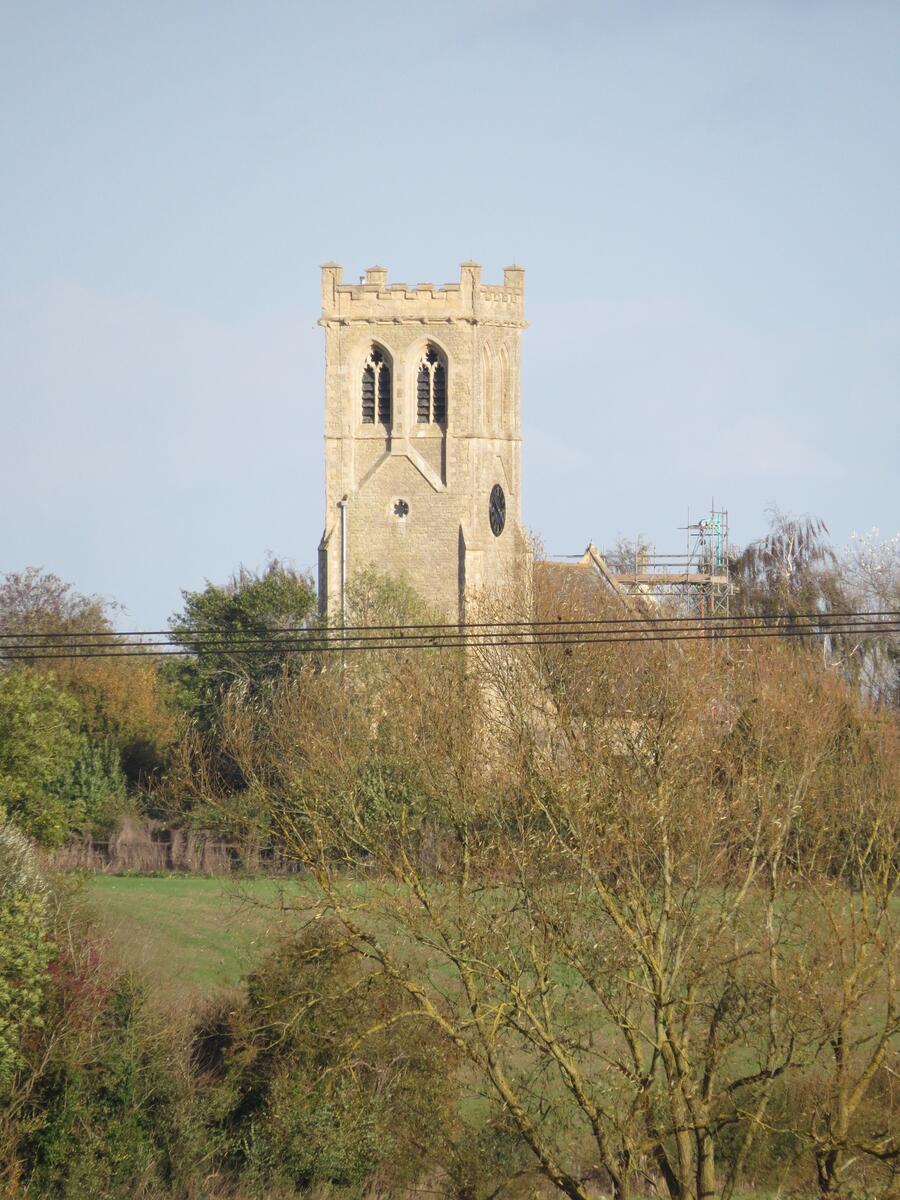
Despite the tremendous poverty in the village in the 19th century, several remarkable buildings were constructed, the best known of these being St James Church The present church is the second be called by that name, the first St James was a mediaeval chapel (probably constructed of, wood), which appears to have disappeared some time before 1780. Little is known of its location but it may have been attached to the manor or in a place called ‘Chapel Heys’. In 1844 the present church was built on land given by Walter Long, Lord of Great Milton Manor. It was designed by an Exeter Architect, John Hayward and built by George Watt of Oxford at a cost of £2,700. The church was constructed in two stages, the Naive in 1844, while the tower, spirelets (now removed) and clock were added in 1861. In 1845 the adjacent Old Vicarage was built in a curious mixture of Cotswold style. The attached turret is unusual, but certainly this .is one of the finest buildings of its kind built in this area of Oxfordshire last century.

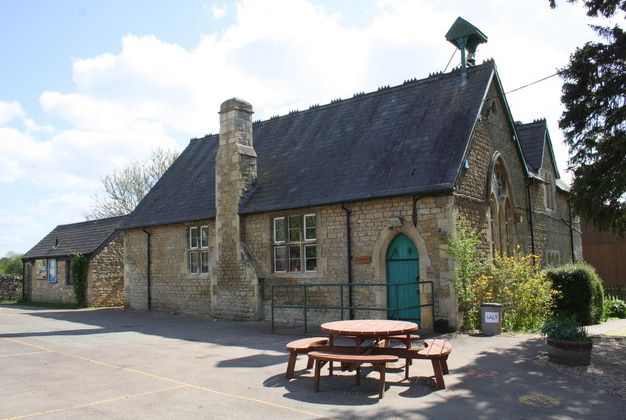
Little Milton’s first school began as a Sunday School in 1818, however for reasons unknown it closed within a few years A second school was started by the Methodist church in 1827 in a house in the village. In 1831, this was shifted to a new Methodist chapel sited somewhere on the Milton Manor estate. Numbers by this date had already reached 60. By 1854 the village had three day schools, one school being for infants, the others for scholars. The demand for education for all ages became so great that evening classes were started for adults for reading and writing. The need for a school building soon became apparent so that in 1861 the present school was built. This was later extended to include a head teacher’s residence in 1893.

Perhaps the last building of any interest to be built in the 19th century was Wesleyan chapel at the Cross, it is not a spectacular piece of architecture as the style is repeated in a number of villages in Oxfordshire; however, it is an important symbol to the non-conformity of this village in its past history of belief and ideals.

Much has changed in Little Milton this century, but there remains in many of the buildings of this village, traces of history that tell of life long struggles of men and women who built the village we enjoy today. Buildings are sometimes the only history we have of many places, yet contained within this village is perhaps the most fascinating history of all, the living history of experiences and records of those people who have lived here all their lives. It is that history that many of us I am sure, would be interested to know more about before the older generation in Little Milton moves on.

The further History of Little Milton from Brian Roberts          


REMINISCENCES OF LITTLE MILTON  in the 1950s  -  by Janet Carpenter Feb 2008

I was born and brought up in the village from the 1950s and my association with the village continued mainly until my parents retired and moved away. My parents are Maurice and Eva Hart who owned and ran Greystone Stores for about 30 years. They arrived in the village in 1954 when telephone numbers only had three digits (ours was 234) and car ownership was not the norm. The property came with an enormous thatched barn, a set of pig sties and chicken runs and a stable complete with feeding manger and hay loft. The house had no hot running water or inside toilet and although there was a cold tap, clear fresh drinking water could still be pumped from a well in the central porch. There was also a solid stone bread oven built into the back wall. There was no central heating. Warmth came from coal fires at the back and the front of the house.


Early Memories

Supplies for the shop were generally delivered from the wholesaler or from individual companies by road but in the early days goods could sometimes arrive by rail and I remember a trip with Dad to Tiddington railway station to collect sausages and ham sent up by Harris’s from Calne in Wiltshire (near where we now live).


My friend Sue’s Grandfather Mr Saunders farmed Belchers Farm when I was quite young and I remember a trip in his land rover down to the Dutch Barns. Later when I was a student I used to work as a potato sorter on the picking machines on Belchers Farm in the summer.


The Doctor, Dr Cox lived in the village at the big house and held his surgery every day in the room at the top of the drive. It was a short walk from Greystone Stores to see the doctor. Once when at my friend’s house directly over the road I cut my finger fairly deeply on a sharp knife while washing up and was whisked across the road to have it dressed. 


In 1963 I remember the very heavy snowfalls. It must have been around a weekend when the worst falls came because I remember watching my father outside clearing a pathway through to the paraffin shed across the drive as he knew there would plenty of customers in on Monday to replenish their stocks to keep their paraffin heaters going in the cold weather. The banks of snow looked as tall as I.


On Sundays we attended morning service at St James Church, Rev Baker was vicar then. After Church we went to Sunday school at the Methodist Chapel in the school room at the back with Mrs Cooper as our teacher.


On the site of Milton Manor Drive there used to be the barns and outbuildings for Milton Manor Farm. These were disused so we used this area as a cut through when walking home from school.


Our favourite play area was the field below the Manor especially when the cows weren’t in it. Here we enjoyed playing on the willows in the marsh imagining them as boats. If we were feeling adventurous we took off on our bikes down to the end of Rofford Lane . A gypsy woman lived down there now and again and came into the village begging for scraps with her large black pram. It was only years later that I discovered it was our old pram given to her by my mother to carry her belongings.


The School

I attended the village school from the age of 5 to 9. The numbers of us were small as few as 17 in total one year. In my year there were two of us. We had three tables in the classroom bottom table, middle table and top table and one teacher, Miss Murchie. Apart from the usual classroom activities we enjoyed cooking in the School House kitchen and sports in the School House garden. The bunny hop race was the most fun. I do not remember anyone needing to be severely disciplined and rewards for good work and behaviour were fruit pastilles bought from the shop.


At the age of 9 we transferred to the Primary School in Great Haseley which was a much bigger school with 80 children. The top class was taught by the head teacher Mr Walker whose hobby was restoring old cars. We travelled to the school each day on a school bus driven by Mr Bill White who with his son Graham ran the Coach Business in Little Milton from what was the garage next to the Methodist Chapel. We had the little old bus for the run to Great Haseley.


The Shop

My father always prided himself on high quality service to all his customers. Although he considered adapting the shop to self service this was not really feasible in the old building and so it continued as it had for many years under his management. There were large tins of loose biscuits for sale in the early days which were discontinued but the tall glass jars of sweets stored on the top shelf remained until the shop closed. The orders of groceries were put together by personal service either for customers who came into the shop or for deliveries which were weekly over two or three evenings a week. He had a long working day.


The bacon and ham were freshly cut for each customer. The meat came in as a side of bacon when required and Dad de-boned it, portioned it into the various cuts of bacon or rolled some into bacon joints. The bones and end cuts were available for dog owners.


Dad was not averse to stocking any goods that would sell so particularly in the early years he carried among other things paraffin for heating, corn for feeding chickens, some hardware items including tins of paint and pots and pans, stationary and greeting cards. Some customers were reliant on his deliveries. For one older single lady Miss Mace in Great Haseley to whom he delivered groceries, he would make special purchases when he went to Thame for supplies. This included her underwear.


Another customer Miss Trowbridge lived in the Lodge Cottages in Little Milton. She had been a district nurse before retirement. She drove up the road in her old Mini to do her shopping. She sat on the shop chair (which I still have) while Dad put together her order and then had it loaded into her car. She was also a faithful member of the Church and her gravestone can be seen in the top left of the Churchyard.


There were still remnants of some very old Little Milton families when we lived there who had lived and worked in Little Milton for several generations. Notably there was Mr George Mason who lived in a small cottage at the end of Blenheim Lane . He was from a family of shepherds. Miss Connie Pittam, also in Blenheim Lane , came from family of agricultural labourers and strong Methodists and the Quartermains. Mum remembers the Coles too, a large family who lived in a tiny cottage on Haseley Road .


There was also a shop cat, Ginger, who kept the mice at bay, but loved the company. There was a stream of visitors six days a week through the front door to pet him. A bus rolled up outside every couple of hours with more people and once a fortnight the library van came. He was known to get on the bus but fortunately someone usually noticed and put him off before it left. He had first belonged to a farm worker who lived in one of the cottages on the cross. He soon discovered there was better company to be found across the road and when his owner moved to Little Haseley to a new job, Ginger decided this was not for him. He made his way back to Little Milton across the fields and the shop became his permanent home. When my parents moved from the village he was still alive but very poorly and died soon after the move.


And finally…I continue to have happy memories of my village childhood and love to return occasionally to visit my father’s grave and wander around the village remembering. I am researching the past history of the village at present for a local history project and would love to hear from anyone who has information on the age and past history of their present home in the village – new or old – or just your own comments concerning the above or the present village.

Janet Carpenter ‘janet_carpenter@btinternet.com’